
Introduction
While traditional lectures have been the mainstay in instructional strategies, their use alone is quickly becoming outdated. There have been various active learning strategies adopted and implemented across pharmacy education (Stewart et al., 2011). An abundance of evidence supports active-learning strategies on how they improve learning outcomes (Gleason et al., 2011). Based on the report by the American Association of Colleges of Pharmacy (AACP) 2013-2014 Academic Affairs Committee, it was recommended that schools and colleges of pharmacy include active learning, games in particular, in their didactic and experiential curriculum for learning and professional development (Cain et al., 2014). Game-based learning (GBL) in pharmacy studies was shown to foster deep learning and enhance students’ engagement (Caldas et al., 2019; Eukel et al., 2017). GBL in other healthcare fields also has promising results. Nursing education has incorporated GBL into their curriculum to improve both productivity and retention of knowledge (Brull et al., 2017). Medical education incorporated gamification into their residency program to support credentialing, examination scores, surgical technique, and clinical decision-making skills (Ruble et al., 2021). Moreover, studies in other settings confirmed that GBL enhanced knowledge retention and effectively engaged students (Hamari et al., 2016; Sitzmann, 2011).
Performing pharmaceutical calculations is a critical skill for pharmacy students as it forms the foundation for accurate medication preparation and ensures patient safety (Crawford et al., 2024). Mastery of this subject is essential not only for academic success, but also for competence. According to the National Association of Boards of Pharmacy (NABP) (2021) and Crawford et al. (2024), North American Pharmacist Licensure Examination® (NAPLEX®), one of the computerized licensing exams for pharmacy graduates, contains approximately 14% of calculation-related questions. However, many pharmacy students have struggled with pharmaceutical calculations as evidenced by the declining trends of calculation-related performance in NAPLEX that might result in exam failure (Crawford et al., 2024). Therefore, innovative educational strategies such as GBL are needed to address these challenges. Despite its importance, pharmaceutical calculations were not one of the content areas utilizing GBL reported in the literature for pharmacy education (Oestreich & Guy, 2022). The objective of this article is to describe the development and implementation of a team-based game, and students’ perceptions on their engagement, teamwork, and confidence in pharmaceutical calculations. The activity received IRB exemption, and a poster was presented at 119th AACP Annual Meeting (Van et al., 2018).
Methods
Activity Overview
Third year pharmacy students participated in the activity during the didactic portion of Introductory Pharmacy Practice Experiences (IPPE) III course in Fall 2018. They were placed in groups of four for a total of 13 teams after attending four hours of in-class review on pharmaceutical calculations. Ten minutes were allotted for activity overview, followed by forty-five minutes of the actual activity. The last five minutes were for debrief and administration of a survey.
Activity Development
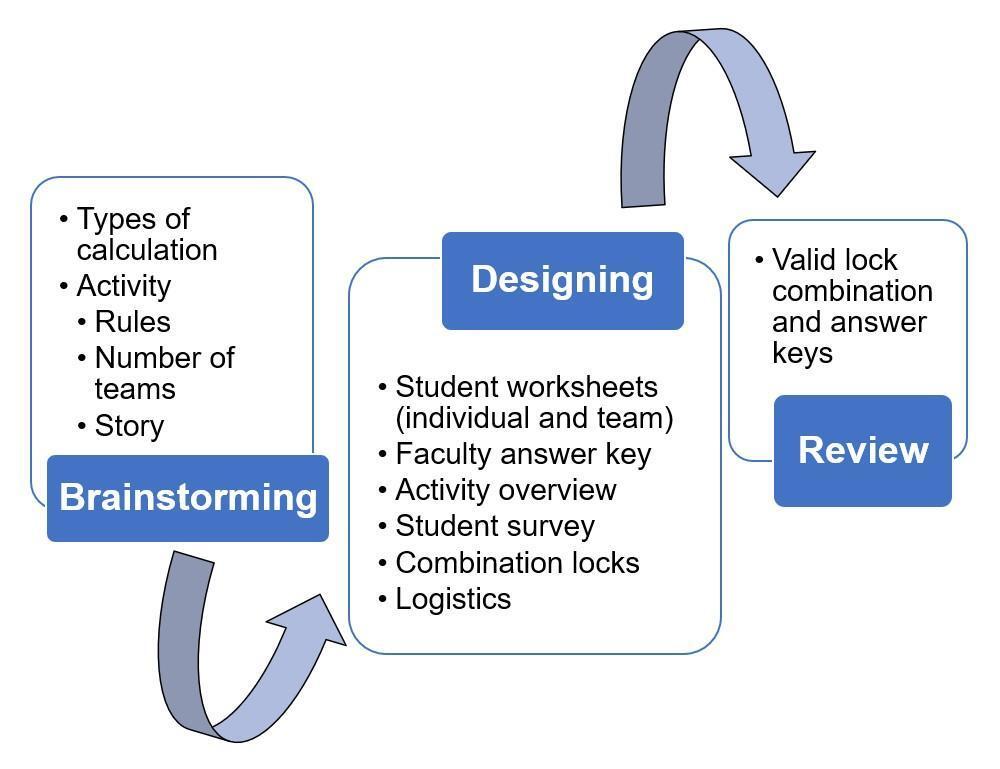
There were three phases in the development process consisting of brainstorming, designing, and reviewing, each of which had several key components (Figure 1). Students worked on individual yet comparable calculation problems and combined their answers with their teammates to open locked boxes with prizes. The goals of these individual and team components were to allow students to practice and bolster their confidence in calculation topics and engage with their teammates. Compared to conventional teaching methods, GBL in team settings have been shown to be more effective due to chances for articulation of knowledge (Wouters et al., 2013). Types of calculation for the activity were chosen based on topics assessed in the capstone course. The storyline was about teams of alchemists aiming to open one of three treasure boxes and create a magic potion to save their princess from a witch.
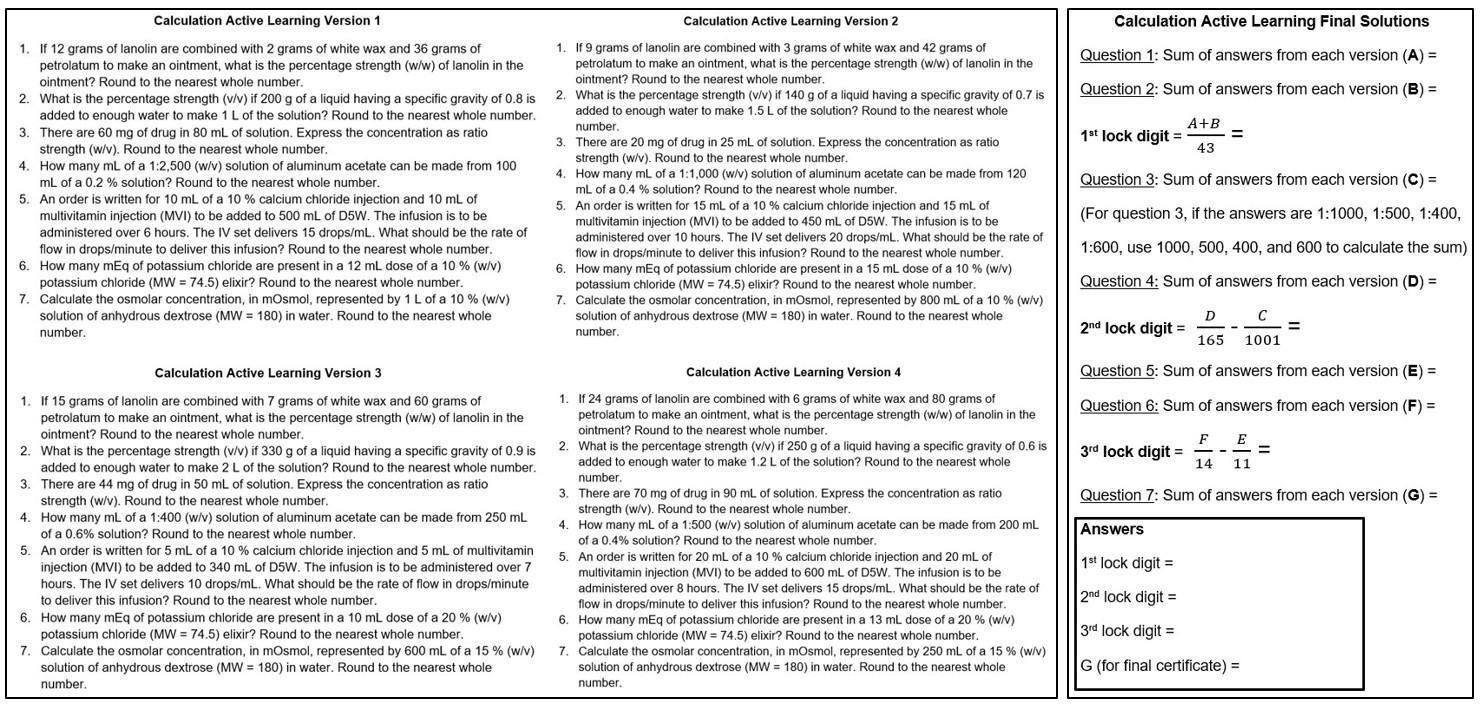
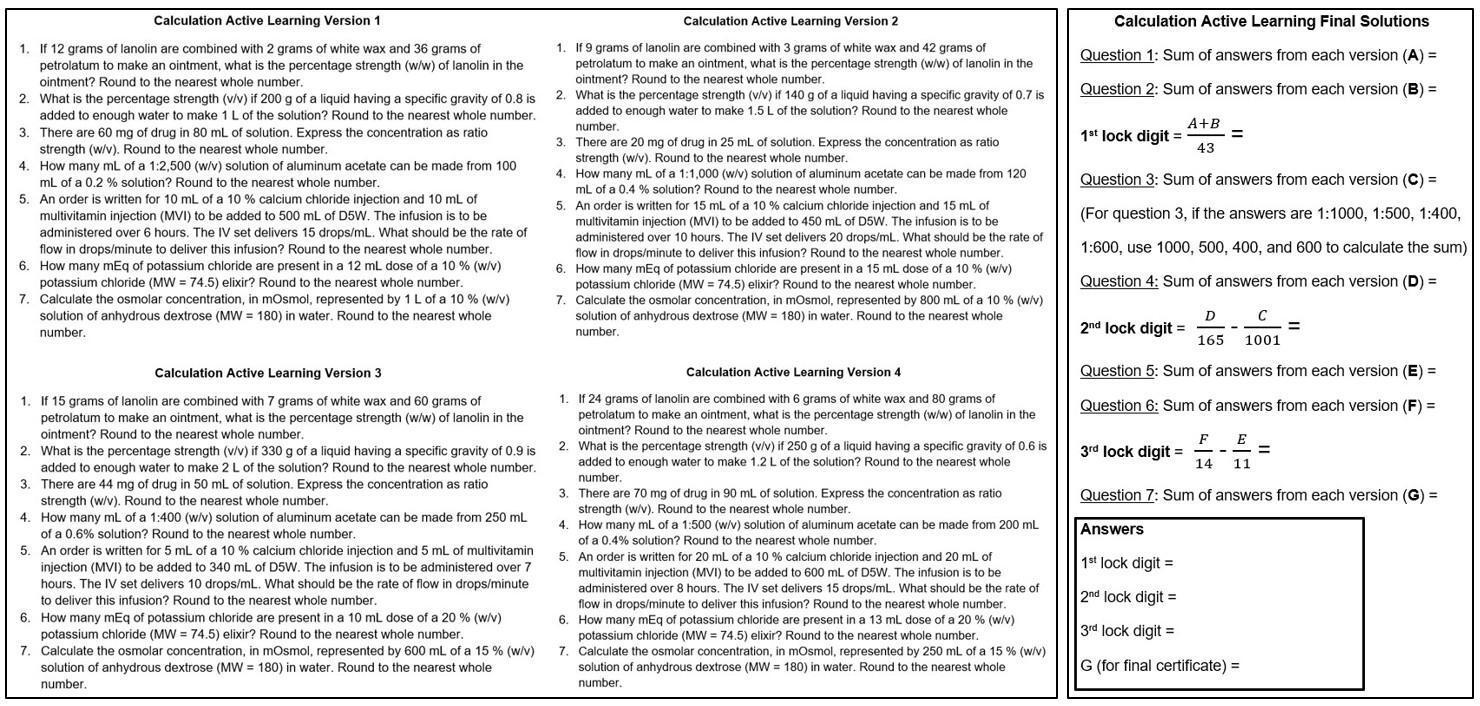
Each team received a packet containing four individual calculation worksheets with seven questions per worksheet (Figure 2). Questions were similar across all worksheets, although the final answers varied. The packet also had one team worksheet with instructions on how to combine answers from the individual worksheets to obtain the combination for the locks and complete the storyline (Figure 2). The lock combination was the same across all boxes to ensure consistency. Successful teams kept the prizes and received certificates. The entire activity was reviewed for accuracy by another faculty member prior to implementation.

Activity Implementation
One faculty member facilitated the activity. All teams remained in the classroom. No special technology was needed. During the activity, each team representative could ask the faculty for hints to solve one calculation question and had one chance to check a team member’s answers to all questions in the worksheet. The immediate feedback mechanisms in this game-based activity and other GBL environments in the literature offered opportunities for knowledge assessment and correction (Wouters et al., 2013).
Assessment and Analysis
In-class post-activity survey was used to assess students’ engagement, teamwork, and confidence in performing calculations. It was anonymous and voluntary. The survey included 12 items utilizing a four-point Likert scale ranging from strongly disagree (or 1) to strongly agree (or 4) (Table 1). There were also open-ended items in the survey for additional feedback on the session. Descriptive statistics were conducted on the data collected using Microsoft Excel.
Disclosure of Generative Artificial Intelligence (AI) Use
ChatGPT was used solely to ensure grammatical accuracy and enhance content flow (OpenAI, 2024). Authors made all intellectual contributions, data interpretation, and conclusions.
Results
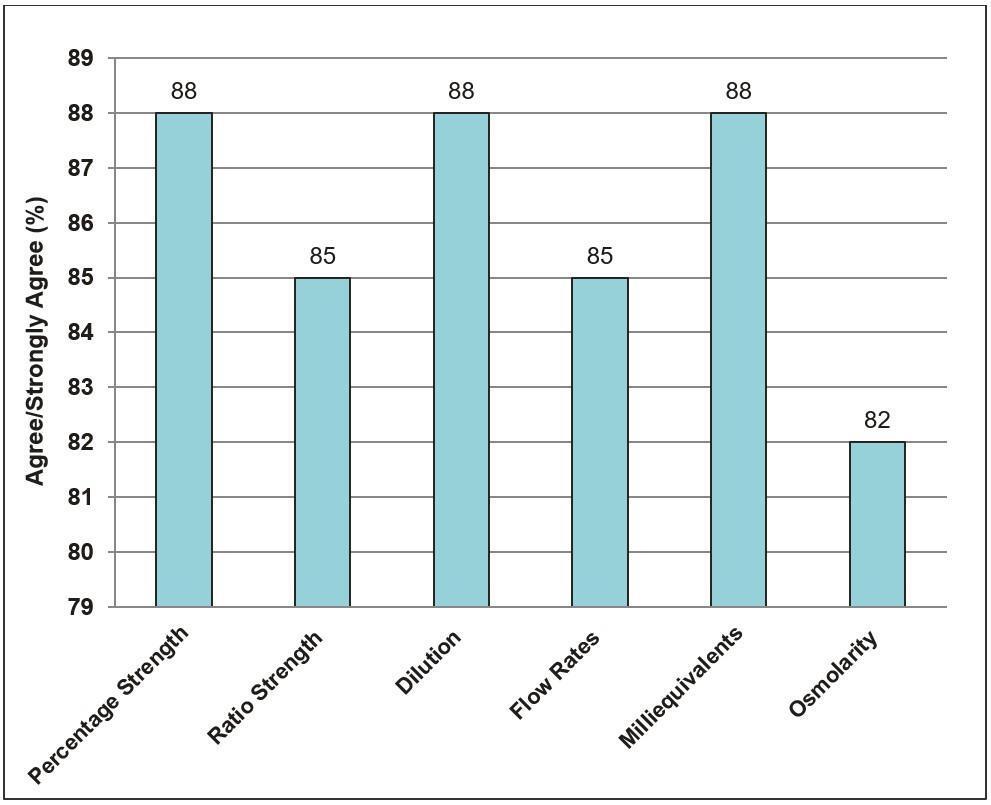
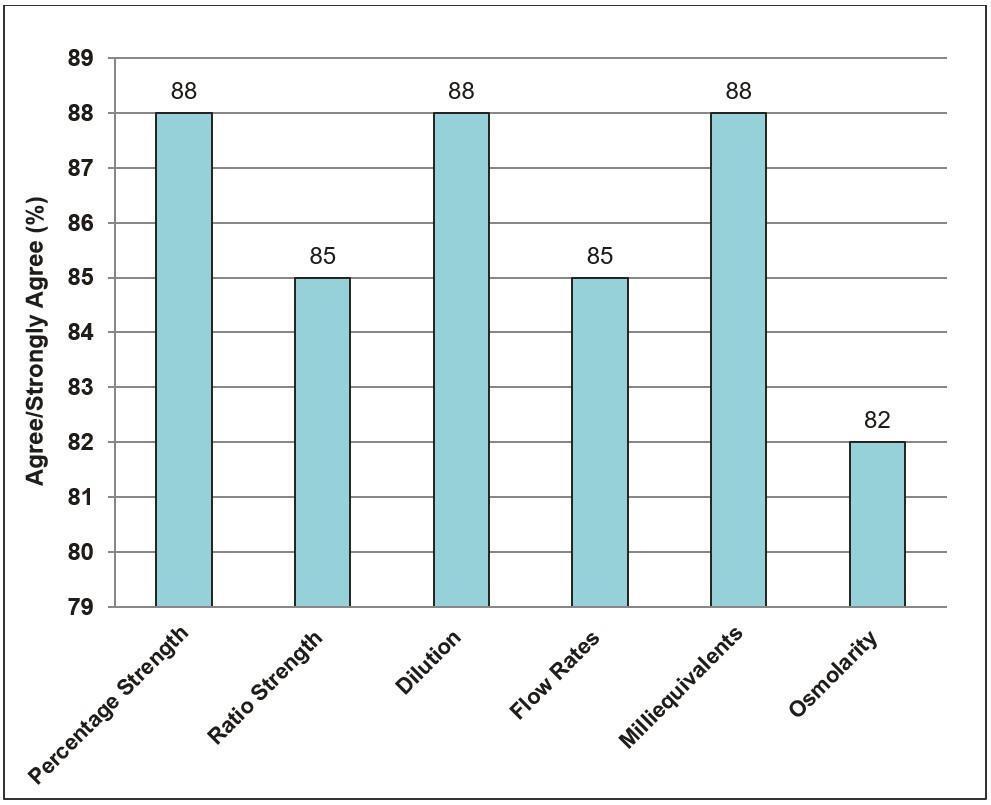
Forty-four students participated in the activity. Thirty-four students completed the survey, yielding a response rate of 77%. Of the number of students who completed the survey, 82% to 88% agreed/strongly agreed they were more comfortable performing the calculation topics (Figure 3). In addition, 94% of students agreed/strongly agreed their teammates were engaged, and 91% of students agreed/strongly agreed this activity improved their ability to work in teams (Table 1). Furthermore, 88% of students agreed/strongly agreed they would like to do this activity in other courses (Table 1). The median response for each of the 12 Likert-scale survey items was strongly agree (or 4). For the open-ended items of the survey, students commented on their enjoyment of the activity and suggested more prizes.
Discussion
The results of this study demonstrated that a puzzle-based pharmaceutical calculations activity modeled after escape room principles effectively promoted student engagement, collaboration, and confidence. Consistent with prior literature (AACP, 2021; Caldas et al., 2019; Eukel et al., 2017), the activity led to increased self-reported confidence in both calculation ability and teamwork. Unlike traditional escape rooms, which typically involve multiple problems, this activity focused on a single multi-part puzzle per student, aligning with the goal of reinforcing individual accountability within a team-based environment (Wiemker et al., 2015). Observed increases in student engagement were further supported by the survey data. Over 90% of students agreed/strongly agreed that their teammates were engaged, and they felt more comfortable working in teams following the session. Since each student held a unique piece of the puzzle, this created an authentic need for collaboration and communication, elements that are key to professional practice.
Despite the positive outcomes, some challenges emerged. In this initial implementation of the activity, faculty time investment was substantial. Approximately 15 hours were required to develop 28 unique questions to guarantee each student in a team of four had a personalized problem set. Although time-intensive, this design element ensured that students could not rely on copying from teammates, thus fostering peer teaching and accountability. Once developed, the materials, including the combination locks, incurred minimal financial cost and were reusable, indicating that the activity would be sustainable and scalable for future cohorts. Moreover, with advancement in AI technology, there would be opportunities to optimize the development process and decrease faculty workload. Another challenge was activity duration. The class session allocated only one hour for implementation, which might be insufficient for some students to complete the activity and fully participate in the debrief. Allowing 90 minutes in future iterations would provide a more reasonable timeframe for completion, discussion, and reflection. This is important since it has been shown that supplemented instructional methods such as reflection or debrief increased the effectiveness of GBL due to knowledge integration (Wouters et al., 2013).
Future iterations of the activity will incorporate improvements in both instructional design and assessment. A more robust storyline will be developed to enhance narrative immersion and provide students with a clearer sense of purpose. The scope of calculation content will expand to include isotonicity, percent ionization, and total parenteral nutrition. From an assessment perspective, since this was a pilot study, data on students’ perceptions was captured; however, future implementations will include pre- and post-activity assessments tagged to specific calculation topics to evaluate both immediate and long-term knowledge retention. To further evaluate teamwork and engagement, validated rubrics such as the Association of American Colleges and Universities’ Teamwork VALUE Rubric will be explored (2009).
Given the continued interest in virtual learning modalities (Bzowyckyj et al., 2021), the activity also has potential for online adaptation. Use of video conferencing platforms for team breakout rooms, digital survey tools such as Google Forms to simulate locks, and structured pre-brief and debrief sessions can allow the activity to meet the needs of remote learners while preserving core educational objectives.
Conclusions
This study adds to the growing body of literature on GBL in pharmacy education. The activity is cost effective and engages the students. The structure of the activity emphasizes peer teaching, self-directed learning, and real-time collaboration, key components for preparing students for practice readiness. With modest resource requirements and growing evidence of effectiveness, this activity may serve as a viable alternative or supplement to traditional escape room strategies in pharmacy curricula to enhance students’ confidence in pharmaceutical calculations.